

What We Build Reveals Who We Are
6 architectural wonders that time simply could not touch...

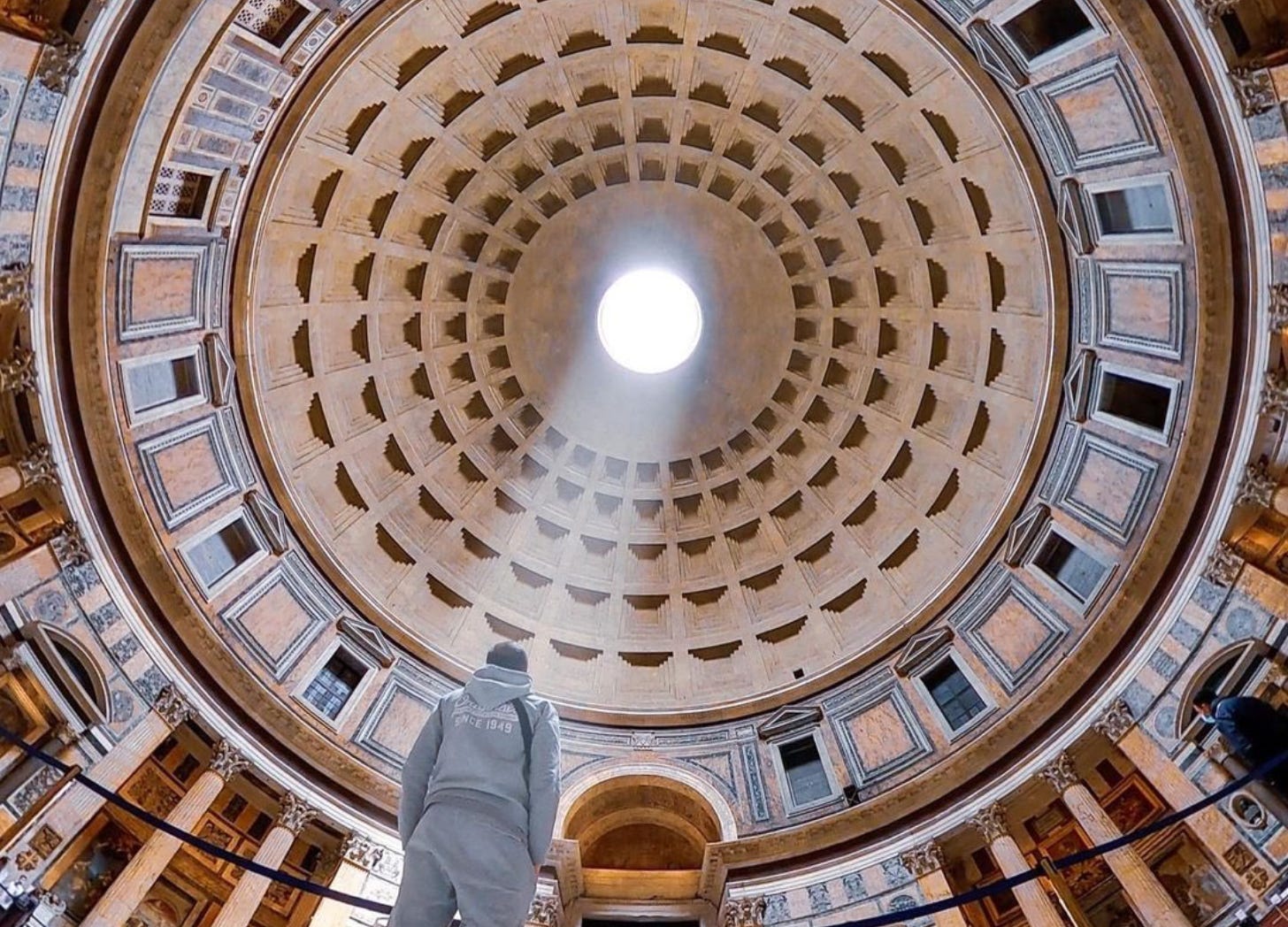
In The Seven Lamps of Architecture, John Ruskin wrote:
When we build, let us think that we build forever. Let it not be for present delight, nor for present use alone; let it be such work as our descendants will thank us for; and let us think, as we lay stone on stone, that a time is to come when those stones will be held sacred because our hands have touched them, and that men will say, as they look upon the labour and wrought substance of them: ‘See! This our fathers did for us.’
There is a reason some buildings fill you with awe and others depress you. It is not a matter of taste. It is something much more fundamental… something that operates on us whether we notice it or not.
And most people, it turns out, feel exactly the same way about it: according to a survey conducted by the Harris Poll for the National Civic Art Society, more than seven in ten Americans — 72 percent — prefer traditional architecture for federal buildings over modernist alternatives.
Not many can articulate why. People just know that certain buildings make them feel small in the best possible way, and others make them feel like they do not matter at all.
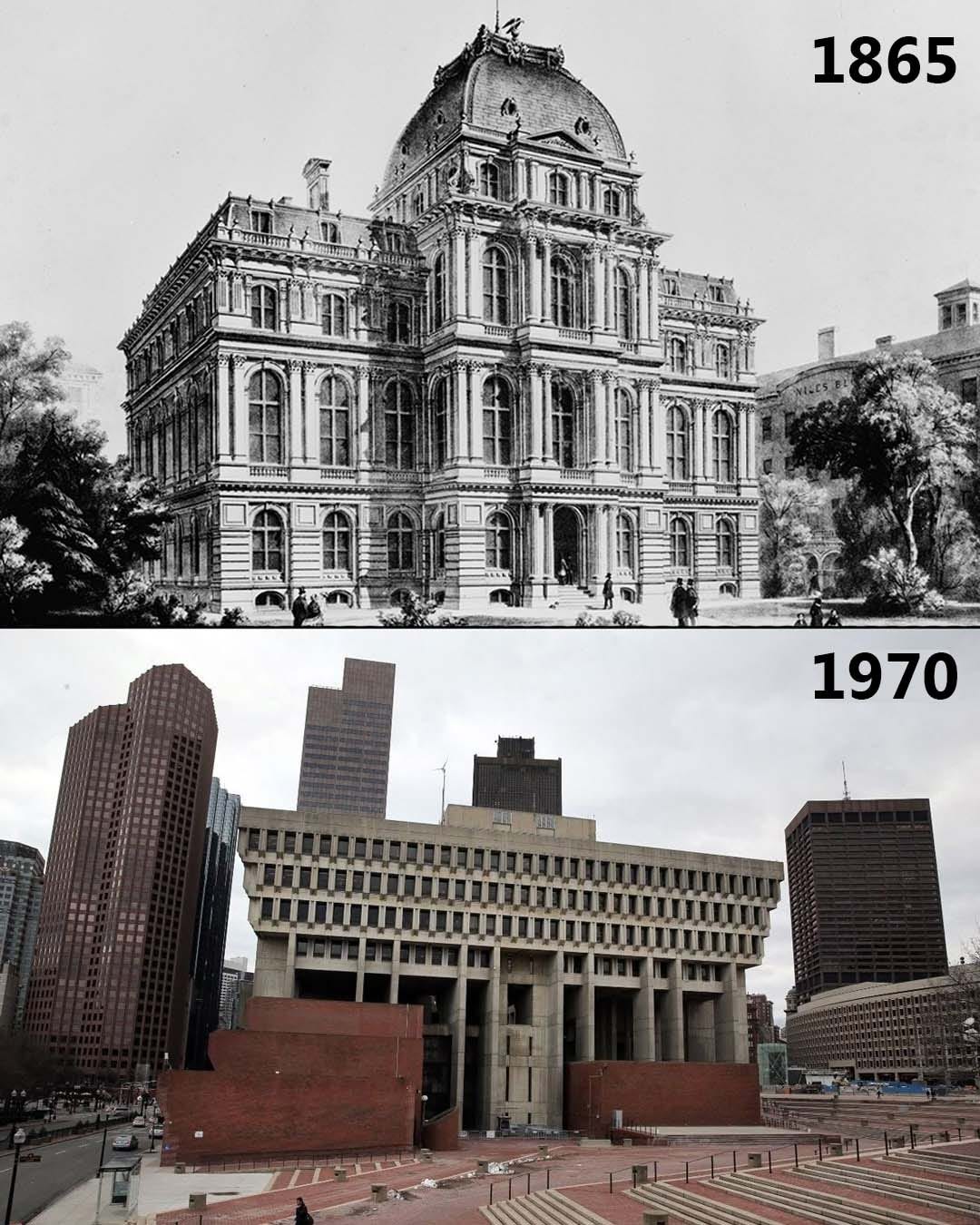
In 1849, Ruskin devoted an entire essay to the idea that architecture should be judged not merely by utility but by its effect on the human spirit. A century later, Winston Churchill said the same thing in eight words:
We shape our buildings; thereafter they shape us.
No civilization has ever made this argument more convincingly than Rome. Just two days ago, the Eternal City turned 2,779 years old, and the things it built are still standing... Pause on that for a moment. This was a culture that raised these structures without any of the tools we consider essential today — and yet what they left behind has survived everything history has thrown at it since.
The difference is not only technical. It is philosophical. The Romans built as though what they were making mattered beyond their own lifetimes. We live in a society organized around the opposite principle — planned obsolescence, the deliberate engineering of things to fail and be replaced, because durability is the enemy of profit. We have applied this logic not just to our phones and our furniture but to our buildings and our cities. And we are living with the results.
What a civilization builds is the most honest thing it ever says about itself. Here are 6 things Rome said — and has been saying, without interruption, for two thousand years…
REMINDER: Beauty is Truth is entirely reader-funded. There are no ads here, only independent writing devoted to celebrating beauty — and it can only continue with your help.
If you’ve been thinking about supporting my work, becoming a paid subscriber is the most meaningful way to do it:
Upgrading gives you full access to all paid articles and the entire archive. With the new annual subscription discount, it costs less than a coffee a month. And it is what keeps all of this going. Gift subscriptions to Beauty is Truth are now available too:
1. The Building That Refused to Fall
The Pantheon was commissioned by Emperor Hadrian and completed around 126 AD. It has been in continuous use ever since — first as a Roman temple, then as a Christian church, and today as one of the most visited buildings on the planet.
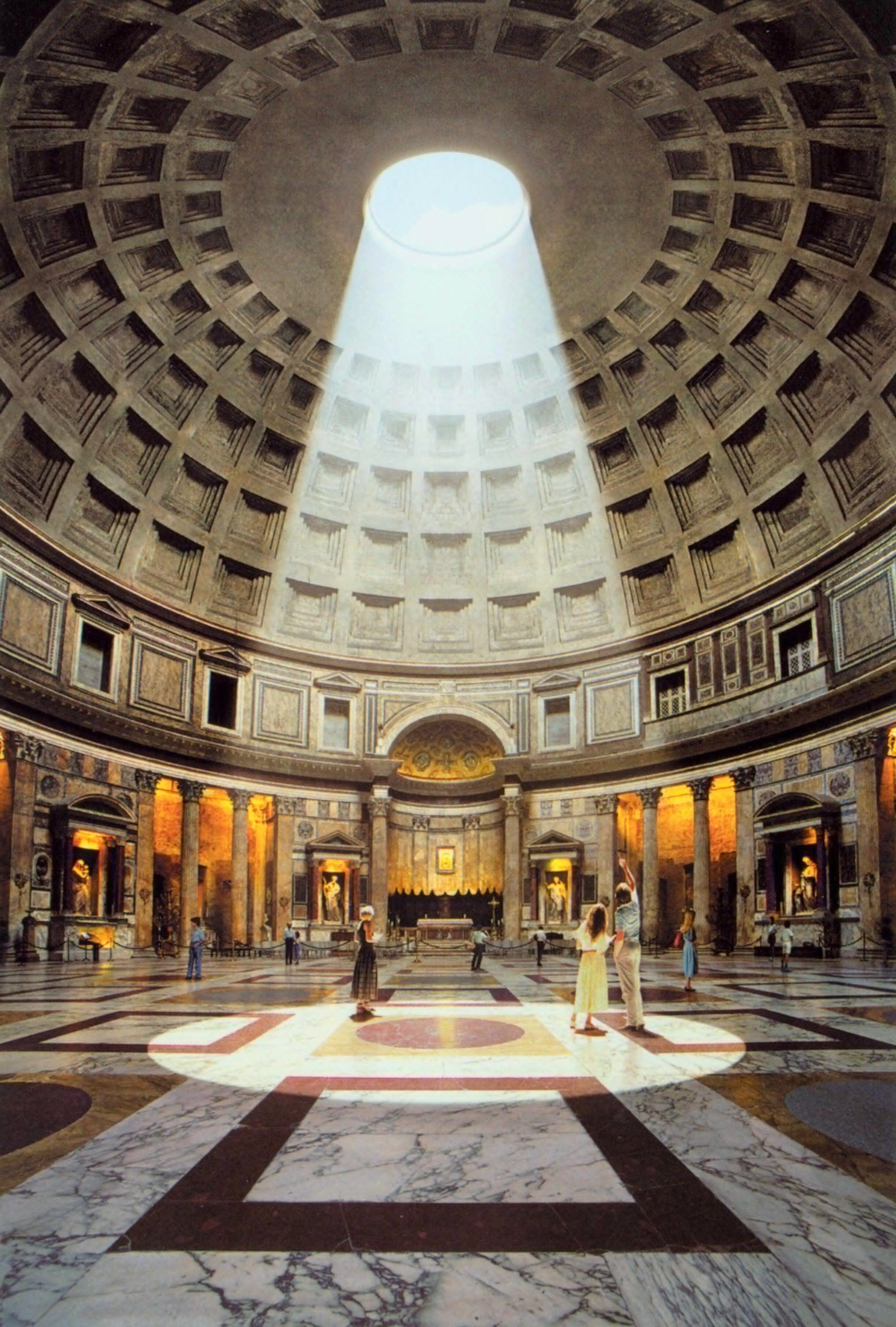
Its dome remained the largest ever built for almost 1,300 years, until Brunelleschi completed the Florence Cathedral in the 15th century. It still holds the record for the largest unreinforced concrete dome on earth, and engineers describe it as one of the most extraordinary structural achievements in the history of architecture.
The entire building was designed as a cosmos in miniature: the interior is exactly 43.3 meters wide and 43.3 meters tall, meaning a perfect sphere fits inside it. The Roman senator Cassius Dio wrote that the vaulted roof was meant to resemble the heavens themselves.
And then there is the concrete — which turns out to be the most astonishing part of all. In 2023, researchers at MIT and Harvard revealed that Roman concrete contains small white deposits called lime clasts, long assumed to be evidence of poor mixing. They were not. They were intentional.
The Romans used quicklime — a highly reactive form of limestone — mixed with volcanic ash and water at extreme temperatures. When cracks form in the concrete and water seeps in, the lime clasts dissolve, release calcium, and recrystallize as new calcium carbonate, chemically sealing the crack before it can spread.
In other words, the concrete repairs itself.
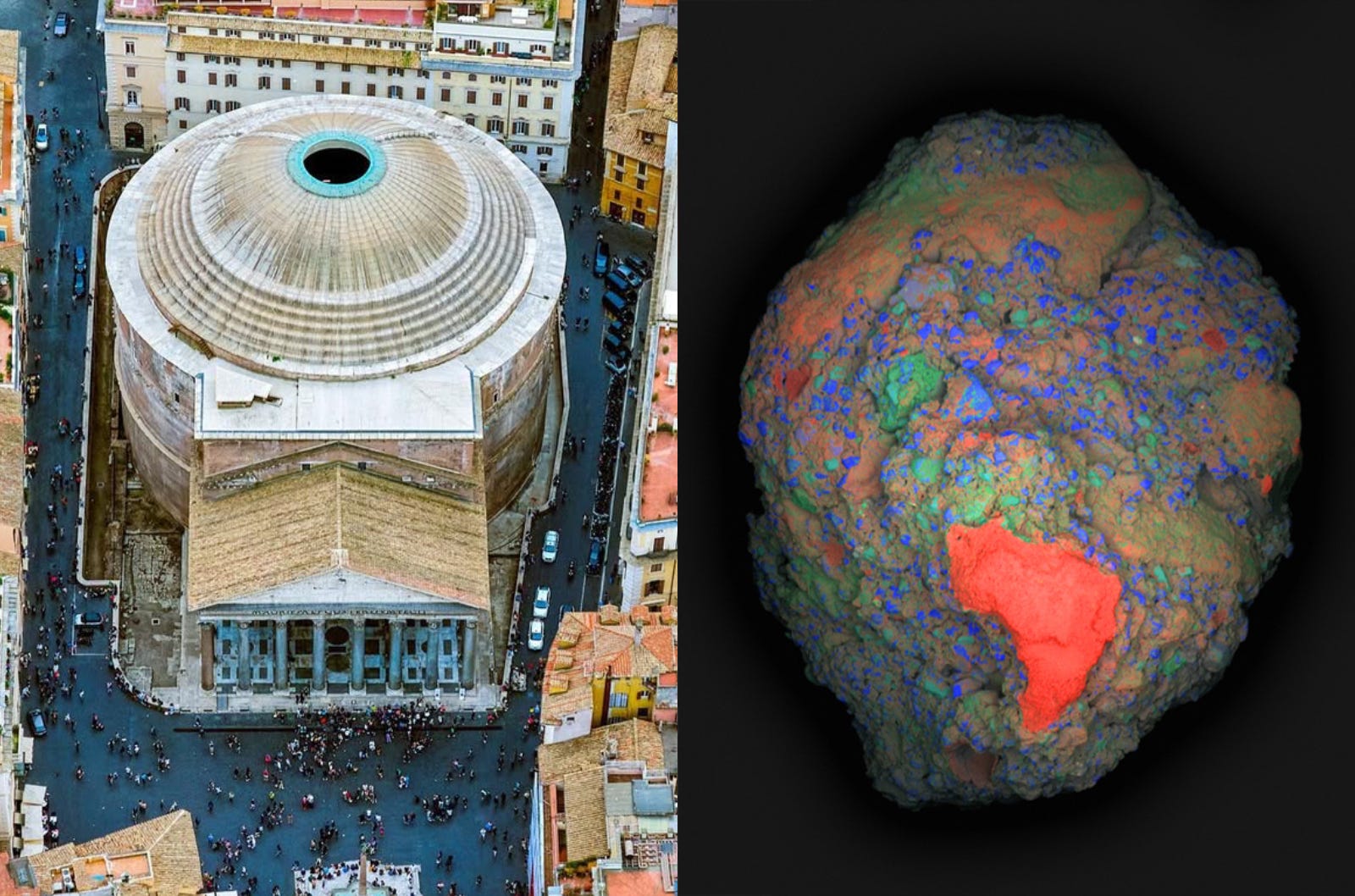
Modern concrete begins to degrade within decades. Roman concrete has been getting stronger for two thousand years…
Above it all sits the oculus — the circular opening, 8 meters across, at the apex of the dome. It is the building’s only source of natural light, and it functions as a precise astronomical instrument.
Every year on April 21st — the founding date of Rome — at exactly noon, the beam of light that enters through the oculus falls directly onto the entrance of the building, illuminating anyone who passes through it. Researchers have confirmed this alignment was deliberate: on Rome’s birthday, the emperor entered the Pantheon bathed in a column of sunlight descending from the heavens.
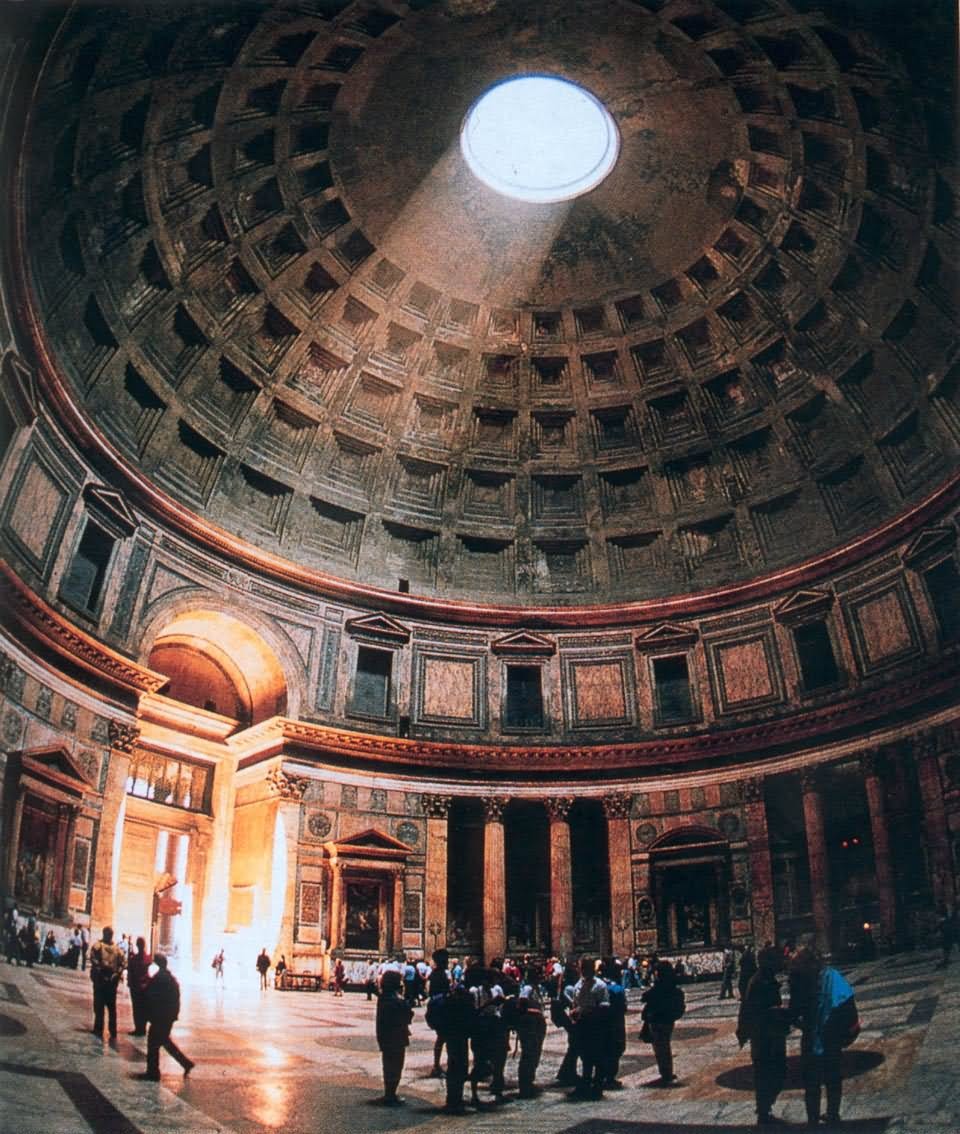
It has been described as one of the first special effects in history.
But a special effect is designed to dazzle and disappear. This was designed to endure — and to mean something to every person who walked through that door, in every century, for as long as the building stood. The difference between that ambition and ours is the distance between a civilization that built for eternity and one that builds for profit.
And perhaps that is the deepest explanation of all for why Rome’s buildings are still here. As G. K. Chesterton once said:
Men did not love Rome because she was great. She was great because they had loved her.
2. Built Without a Single Drop of Mortar
Sometime around the end of the first century AD, Roman engineers built an aqueduct in what is now Spain to carry water from the Frío River to the city of Segovia — a distance of roughly 17 kilometers. To do this, they erected a bridge of 167 granite arches across a valley, assembled from approximately 20,000 blocks without a single drop of mortar. The blocks are held in place entirely by their own weight and the precision of their fit — a technique the Romans called opus quadratum.
The aqueduct served Segovia until 1973, and is now a UNESCO World Heritage Site.
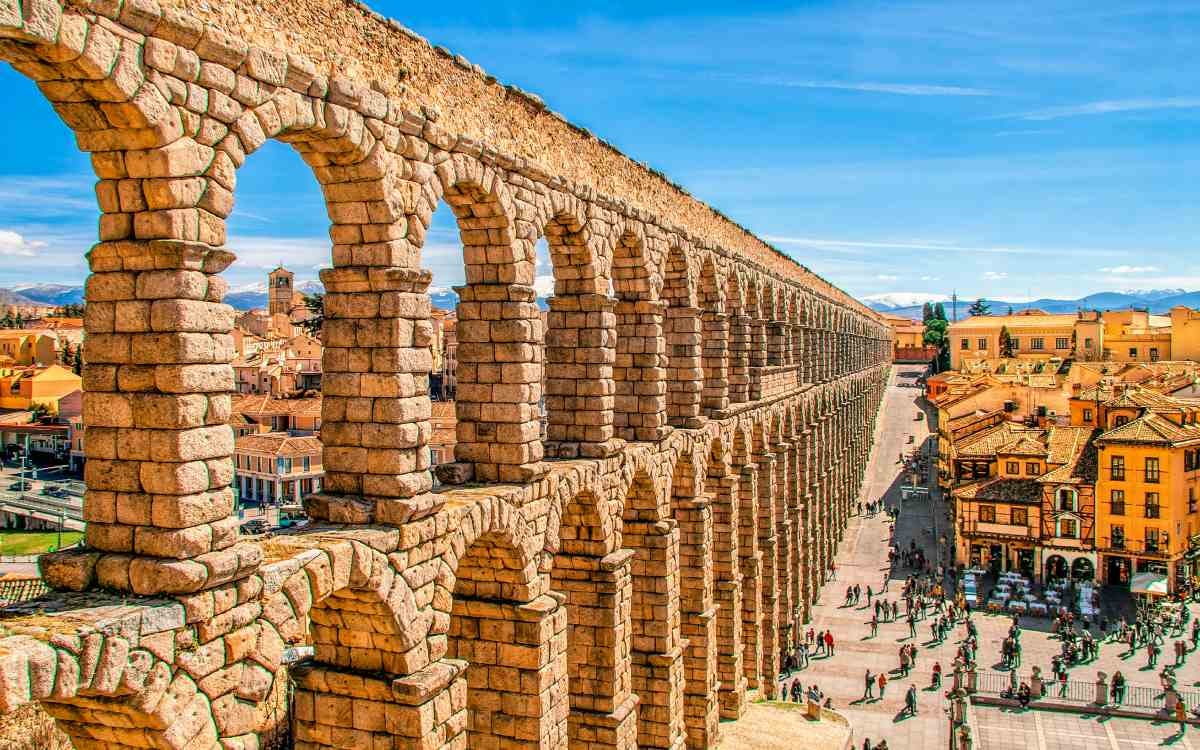
To build something held together by nothing but geometry and gravity, with no mortar, no joint, no material to erode, is to build something with no weakness to find. The secret behind it is the Roman arch…
By distributing weight outward rather than downward, the arch allows a structure to bear loads that would collapse any column or beam — which is why the Romans could build so high, so wide, and so lightly, with nothing but stone.
It is one of the most consequential engineering ideas in human history. The medieval cathedrals, the Romanesque churches, the Renaissance basilicas — none of them could have existed without it. Every time you walk through an arched doorway, in a church or a train station or an old city street, you are passing through something the Romans gave the world.
And if Segovia is the most visible testament to Roman hydraulic ambition, Rome itself offers the most extraordinary one... The Aqua Virgo — known today as the Acqua Vergine — built by Marcus Agrippa in 19 BC, is the only ancient Roman aqueduct still in continuous use today.
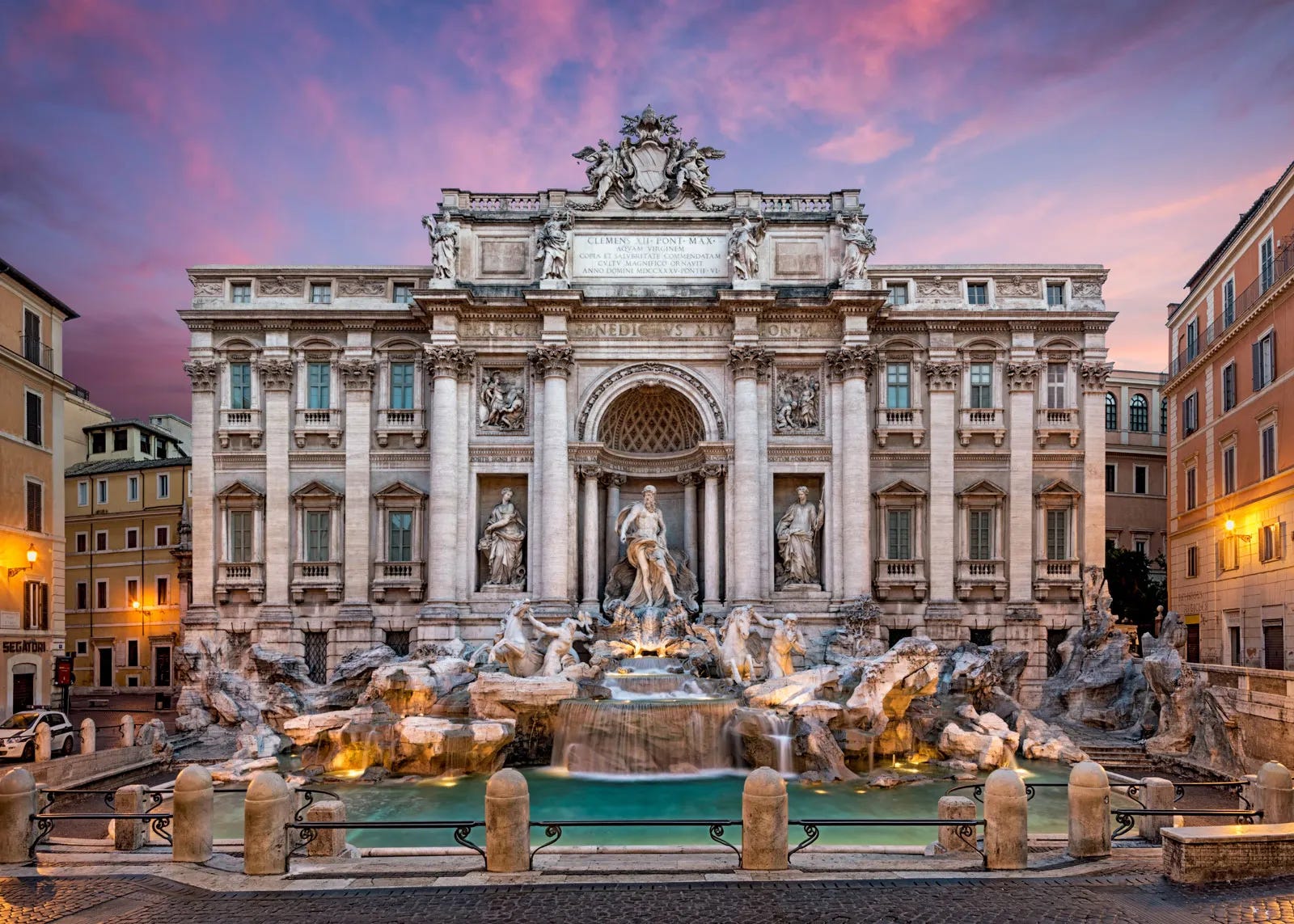
It has been delivering water for over two thousand years — and it still does, right now, feeding the Trevi Fountain, the fountains of Piazza Navona, and the fountain in front of the Spanish Steps. Think about that: the water tourists are tossing their coins into at the Trevi Fountain is being delivered by infrastructure a Roman engineer designed before the birth of Christ.
3. Where the Gladiators Used to Fight
The Arena of Verona was built around 30 AD, during the reign of Emperor Tiberius, to hold gladiatorial contests and spectacles for a crowd of up to 30,000 people. It is one of the best-preserved ancient amphitheaters to have survived into the modern era.
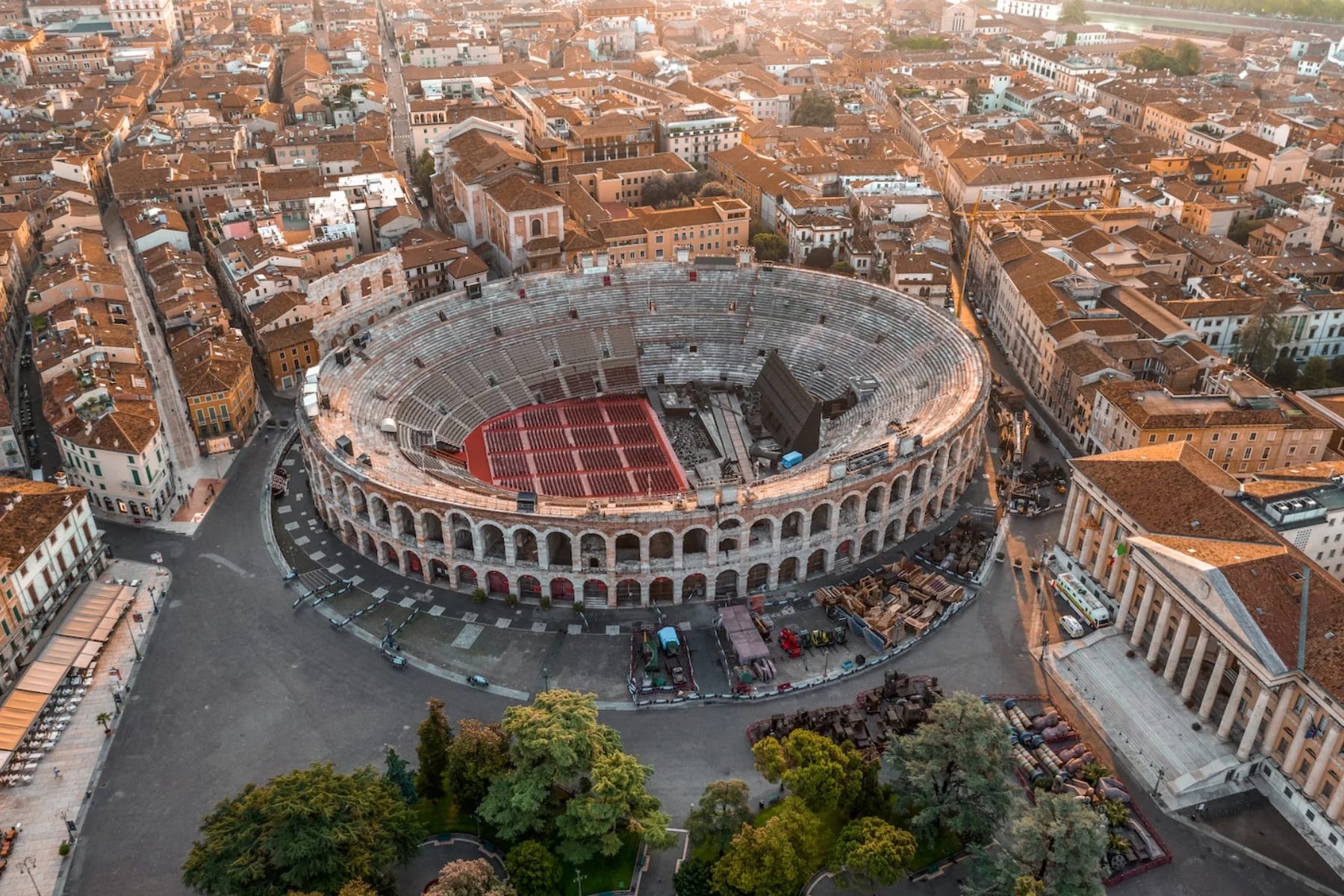
In 1913 — or so the legend goes — a tenor named Giovanni Zenatello was visiting the Arena with friends when they asked him to sing. Standing in the ancient amphitheater, he immediately understood what the acoustics could do. Whether the story is true or not, the result was the same: that summer, Verdi’s Aida was performed at the Arena for the first time, to a crowd that included Puccini, Mascagni, and Franz Kafka.
The festival has run every summer since — interrupted only by the two World Wars and the 2020 pandemic — making the Arena of Verona the world’s largest open-air opera house, with over a hundred seasons behind it. Maria Callas sang here. So did Pavarotti, Plácido Domingo, and José Carreras.
I saw Ludovico Einaudi perform here a few years ago — and I can tell you that sitting on those stone steps, under the stars, with the music carrying out into the night, something happens to you that is difficult to put into words. You feel the weight of everything that came before you, and you are grateful for it in a way that catches you off guard... The Romans left us a place where you can still feel what it means to be alive inside something larger than yourself.
4. The Temple That Shaped America
Built around 4 AD in what is now Nîmes, in southern France, the Maison Carrée is the best-preserved Roman temple in Europe. It has served, across its two thousand years, as a temple, a private residence, a stable, a church, and a government archive — and through all of it, the building itself remained almost entirely intact.
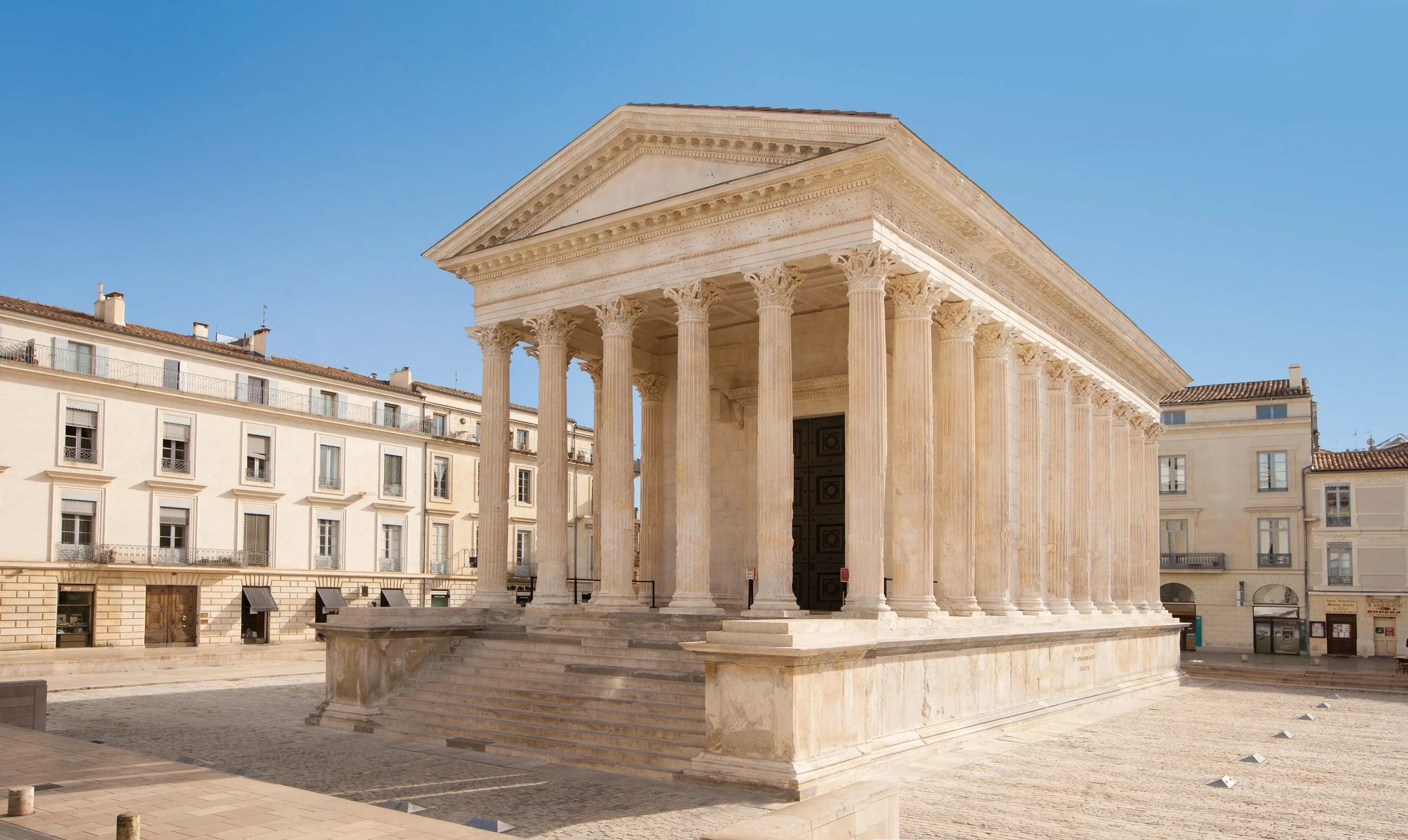
In 1785, Thomas Jefferson — then serving as American Ambassador to France — was asked to design a state capitol for Virginia. He did not invent something new. He wrote to the directors of the Virginia Board of Public Buildings, telling them he had found the model: the Maison Carrée…
He described it as “the most perfect and precious remain of antiquity in existence” and had a plaster replica made and shipped to America for reference during construction. Two years later, he finally visited the building in person and wrote to a friend:
Here I am, Madam, gazing whole hours at the Maison Carrée, like a lover at his mistress.
The Virginia State Capitol he designed in its image became the first neoclassical temple to be realized as a governmental building in the United States — and directly influenced the architecture of American civic life for the next two centuries.

A Roman temple built in the south of France two thousand years ago shaped what American democracy looks like. That is what it means to build something that lasts…
5. The Queen of Roads
Construction of the Appian Way began in 312 BC, commissioned as a military road connecting Rome to Capua during the Samnite Wars. It was eventually extended to Brindisi, on the heel of Italy, stretching over 560 kilometers in total.
The ancient poet Statius called it the regina viarum — the queen of roads.
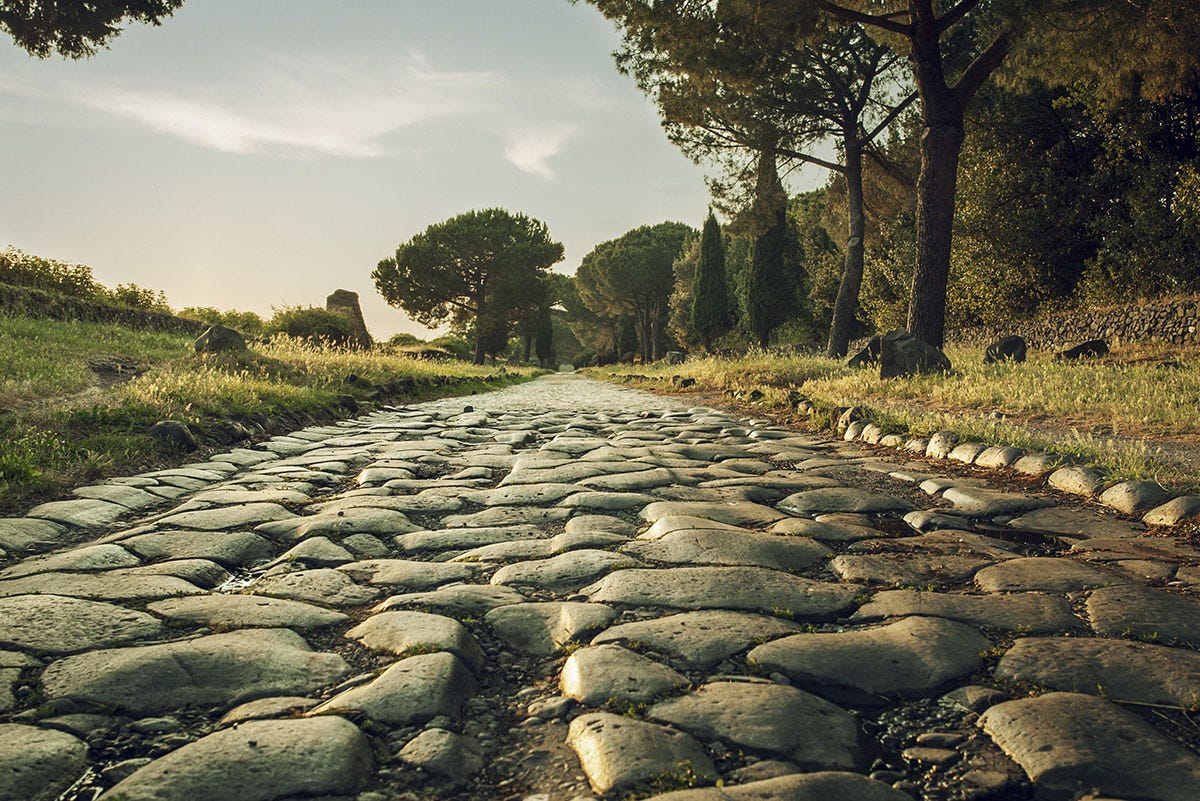
The engineering behind it is extraordinary. The road was built on deep stone foundations, paved with tightly fitted polygonal blocks of volcanic basalt, with a slight camber to drain rainwater to the sides. It crossed marshes, hills, and rivers with bridges and causeways, maintaining a surface so durable that sections of it are still walkable today.
Modern highways in Italy parallel its route — not because engineers chose to follow it, but because the Romans had already identified the most efficient path between the same points, and nothing since has improved on their calculation.
The Apostle Paul walked it into Rome. According to tradition, Saint Peter walked it out fleeing Nero’s persecution. And for over two thousand years, much of what defined the ancient world traveled this road…
6. As Long as It Stands
Emperor Vespasian began construction of the Colosseum around 70 AD, on land formerly occupied by Nero’s Domus Aurea — returned, at last, to the Roman people. His son Titus completed it in 80 AD, in under a decade, and dedicated it with 100 consecutive days of games.
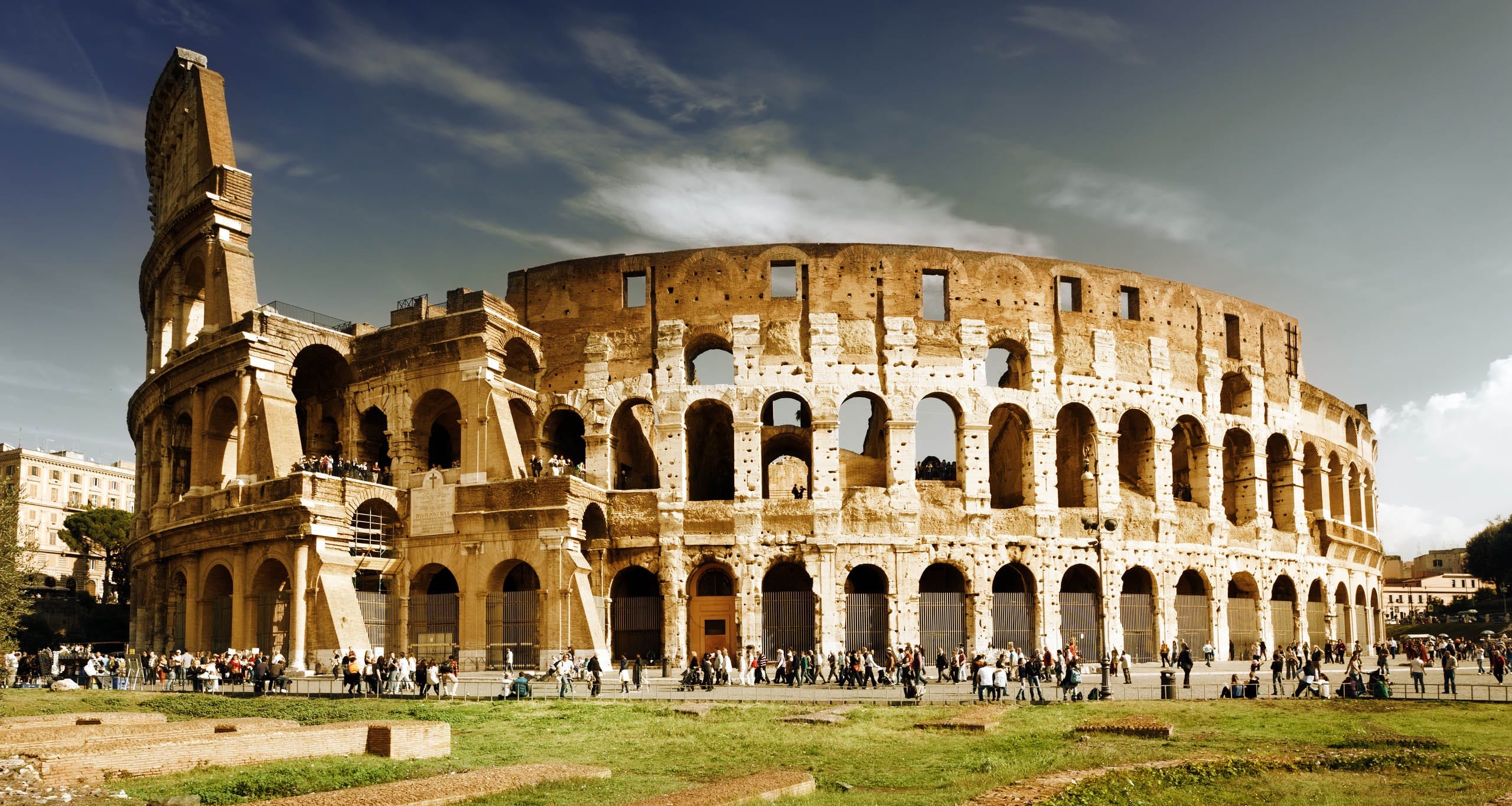
It stands 48 meters tall, covers an area of 24,000 square meters, and could hold between 50,000 and 80,000 spectators, who could be evacuated through its 80 numbered entrances in under 15 minutes. That crowd management system directly influenced the design of every major stadium built since. Every time you walk into a modern sports arena, you are walking into a building that learned how to do it from the Romans.
Roger Scruton once said:
There is a deep human need for beauty, and if you ignore that need in architecture, your buildings will not last, since people will never feel at home in them.
The Colosseum is the most powerful argument for this that has ever been built in stone. It was designed not just to function but to overwhelm — to make every Roman citizen who stood before it feel the full weight of what their civilization was capable of.
The three tiers of its exterior arcade, each framed by columns in the Doric, Ionic, and Corinthian orders, became the basis of the Renaissance architectural system known as the assemblage of orders — the visual grammar that every serious architect who came after learned to speak. It has been teaching for two thousand years…
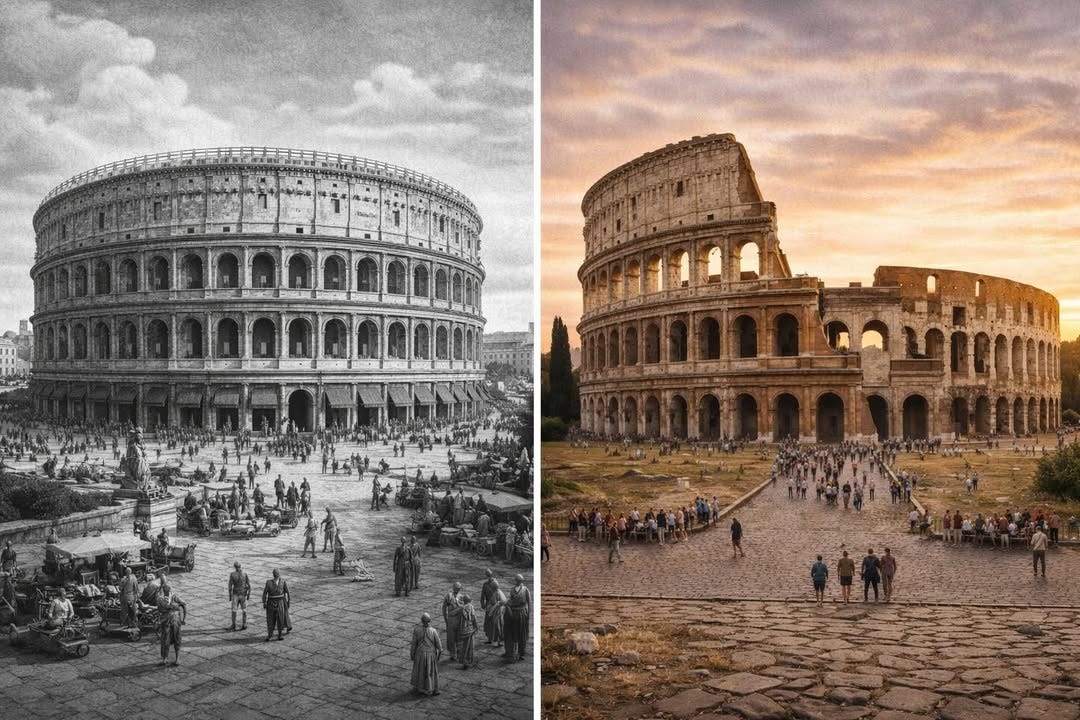
In the 8th century, an epigram attributed to the Venerable Bede offered a prophecy that has never entirely lost its chill:
As long as the Colosseum stands, so shall Rome; when the Colosseum falls, Rome shall fall; when Rome falls, so falls the world.
It is still standing. Scarred by earthquakes and centuries of stone robbers who quarried it for building material — nearly two thirds of the original structure was taken — and still it stands, the largest amphitheater ever built, the most visited monument in Italy, a ruin that is more alive than most things that were never damaged at all.
What the Romans built, they built to mean something. And meaning, it turns out, is the most durable material of all…
Thanks for reading! This newsletter is completely independent and ad-free — and it can only keep going with your help. Please consider contributing a few dollars a month today, and get access to exclusive articles and the full archive:
Every subscription genuinely makes a difference. Thank you for making this work possible.
It is clear that you build these essays with the same care as the architects of beauty you write about, creating monuments to beauty. Interestingly, this essay made me think not of buildings but of humanity, and how what we build within our societies and ancestries will also affect what sustains and what crumbles. That if we build our societies intending them to be strong and beautiful, we will sustain the best of humanity.
Your love of beauty and the eloquence of your descriptions stir my soul. Thank you for this gift.